FESCO Demand Notice

Securing a new electricity connection or modifying an existing one through the Faisalabad Electric Supply Company (FESCO) in Pakistan necessitates understanding the FESCO Demand Notice. This crucial document serves as a formal communication from FESCO, detailing the financial obligations required to proceed with your electricity service.
This comprehensive guide aims to demystify the FESCO Demand Notice, covering its definition, significance, acquisition, tracking, payment procedures, associated charges, and common issues, all presented in a clear and accessible manner to ensure a seamless experience for consumers.
Table of Contents
ToggleWhat is a FESCO Demand Notice?
A FESCO Demand Notice is an official document issued by the Faisalabad Electric Supply Company. It itemizes the various charges that an applicant must pay to finalize a new electricity connection or to implement changes such as a change of name, tariff adjustment, or load modification. These charges typically encompass connection fees, service line costs, security deposits, and other administrative expenses. The issuance of this notice signifies that the initial application has been processed and approved, and the next step involves the applicant fulfilling the financial requirements.
Why is the FESCO Demand Notice Important?
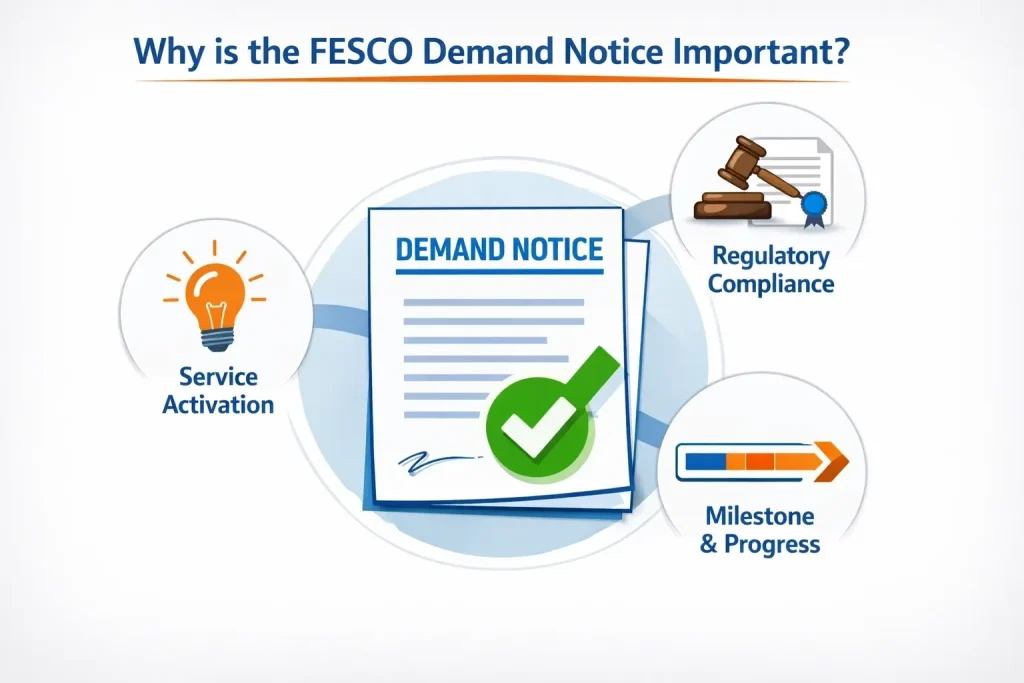
The FESCO Demand Notice holds paramount importance in the process of obtaining or modifying an electricity connection for several reasons:
- Mandatory Payment for Service Activation: The payment specified in the demand notice is a prerequisite for FESCO to proceed with the installation or modification of your electricity connection. Without this payment, the process remains stalled.
- Legal and Regulatory Compliance: Adherence to the demand notice payment ensures compliance with FESCO’s regulations and the broader legal framework governing electricity supply in Pakistan. FESCO will not provide service until all stipulated payments and formalities are completed.
- Progress Indicator: The payment of the demand notice acts as a tangible milestone, signaling to FESCO that the applicant is ready for the next phase, which typically involves the physical installation of the electricity infrastructure.
How to Get Your FESCO Demand Notice (Print It)
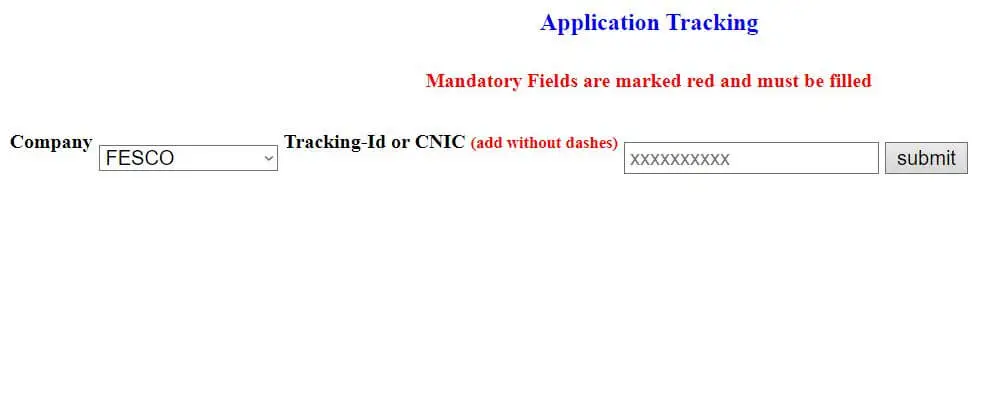
Obtaining and printing your FESCO Demand Notice is a straightforward process facilitated by the Electricity New Connection (ENC) Portal. Follow these steps to access and print your notice:
- Visit the Official ENC Website: Navigate to the official FESCO ENC portal, which is the primary online platform for new electricity connections and related services.
- Select Application Type: Choose the appropriate application type, whether it is for a New Connection or a Change of Name/Tariff/Load.
- Enter Tracking ID: Input the unique Tracking ID that was provided to you upon the successful submission of your initial application. This ID is crucial for accessing your specific demand notice.
- Print the Notice: After entering the tracking ID, locate and click on the “Print Demand Notice” button. The notice will typically be downloaded as a PDF file, which you can then print at your convenience.
How to Track Your FESCO Demand Notice
Tracking the status of your FESCO Demand Notice is essential to stay informed about its issuance and subsequent processing. The ENC portal also provides a facility for this:
- Access the ENC Website: Go to the FESCO ENC portal.
- Navigate to Tracking Section: Look for a “Track Application” or similar option, usually found in the left-hand menu or a prominent section of the website.
- Select Application Type: Specify whether your application is for a “New Connection” or “Change of Name/Tariff/Load.”
- Provide Details: Enter your Tracking ID and select “FESCO” as the company. In some cases, you might also need to enter your CNIC Number.
- Submit and View Status: Click on the “Submit” button to view the current status of your demand notice, including whether it has been issued, paid, or is awaiting further action.
How to Pay Your FESCO Demand Notice
Once you have obtained and reviewed your demand notice, the next critical step is its payment. While online payment options for the demand notice itself are limited and often require specific bank integrations, the primary method involves physical payment at designated banks:
Step 1: Review the Demand Notice
Carefully examine all details on the demand notice, including the total amount due, the breakdown of charges, and the due date. Ensure that all personal and connection details are accurate to avoid future complications.
Step 2: Pay at a Designated Bank
Proceed to one of the banks authorized by FESCO to collect demand notice payments. These banks are typically listed on the demand notice itself. Pay the full amount at the bank counter and ensure you receive a stamped and signed receipt as proof of payment.
Step 3: Upload the Paid Receipt (Crucial for Verification)
- Return to the FESCO ENC Website: Log back into the ENC portal.
- Access “Upload DN”: Find the “Upload DN” or “Upload Paid Receipt” option, usually available in the main menu.
- Enter Tracking ID or CNIC: Provide your Tracking ID or CNIC Number to access your application.
- Upload Receipt: Follow the instructions to upload a clear scan or photograph of your stamped payment receipt. This step is crucial for FESCO to verify your payment and continue processing your application.
FESCO Demand Notice Charges
The charges outlined in your FESCO Demand Notice are not fixed and depend on several factors, primarily the length of the service line required and whether the connection is two-phase or three-phase. These charges cover the cost of materials, labor, and administrative overheads associated with establishing the electricity connection.
| Service Line Length | Two-Phase Connection Charges (PKR) | Three-Phase Connection Charges (PKR) |
|---|---|---|
| Up to 40 meters | 9,000 | 9,000 |
| 9,000 + 800 per extra meter | 9,000 + 800 per extra meter | 9,000 + 800 per extra meter |
| 101 to 160 meters | 57,000 + 1,000 per extra meter | 57,000 + 1,000 per extra meter |
Note: These charges are indicative and subject to change based on FESCO’s policies and prevailing economic conditions. It is always advisable to refer to the latest demand notice for accurate figures.
Timeline After Paying the Demand Notice
After successful payment and verification of your demand notice, FESCO initiates the process of installing your electricity connection. The estimated timeline for this process varies depending on the sanctioned load size:
| Load Size (kW) | Estimated Time Frame (Days) |
|---|---|
| Up to 15kW | 30 |
| 16 to 70kW | 53 |
| 71 to 500kW | 73 |
| 501 to 5,000kW | 106 |
| Over 5,000kW | 496 |
These timelines are estimates and can be affected by various factors, including material availability, workload, and unforeseen circumstances.
Common Issues and Troubleshooting
Applicants may encounter several issues during the FESCO Demand Notice process. Here are some common problems and potential solutions:
- Demand Notice Not Issued/Delayed: This could be due to incomplete application documents, pending verification, or delays in FESCO’s internal processing. Regularly track your application status on the ENC portal and contact FESCO customer service if delays persist.
- Incorrect Information on Demand Notice: If you find any discrepancies in your personal details, connection type, or charges, immediately contact FESCO to get it rectified before making the payment. Making a payment with incorrect details can lead to further complications.
- Lost Tracking ID: If you lose your tracking ID, you might be able to retrieve it by contacting FESCO customer support or by providing your CNIC number on the ENC portal’s tracking section.
- Payment Verification Issues: Ensure you upload a clear and legible copy of your payment receipt. If your payment isn’t verified within a reasonable timeframe, follow up with FESCO, providing proof of payment.
- Additional Demand Notices (e.g., for AMI Meters): In some cases, FESCO might issue additional demand notices, particularly for the installation of Advanced Metering Infrastructure (AMI) or smart meters. Understand the reason for such additional notices and follow the payment procedure accordingly.
Conclusion
The FESCO Demand Notice is an integral part of obtaining or modifying an electricity connection in the FESCO service area. By understanding its purpose, the steps involved in its acquisition, tracking, and payment, and being aware of potential issues, consumers can navigate the process more efficiently. Always refer to the official FESCO ENC portal and FESCO customer service for the most accurate and up-to-date information and assistance. This guide aims to empower you with the knowledge to manage your FESCO Demand Notice effectively, ensuring a smooth transition to a connected and powered future.

Hamza Bilal writes for FESCO Online Bill, sharing simple and accurate guides to help FESCO consumers check, understand, and pay their electricity bills online without any hassle.